

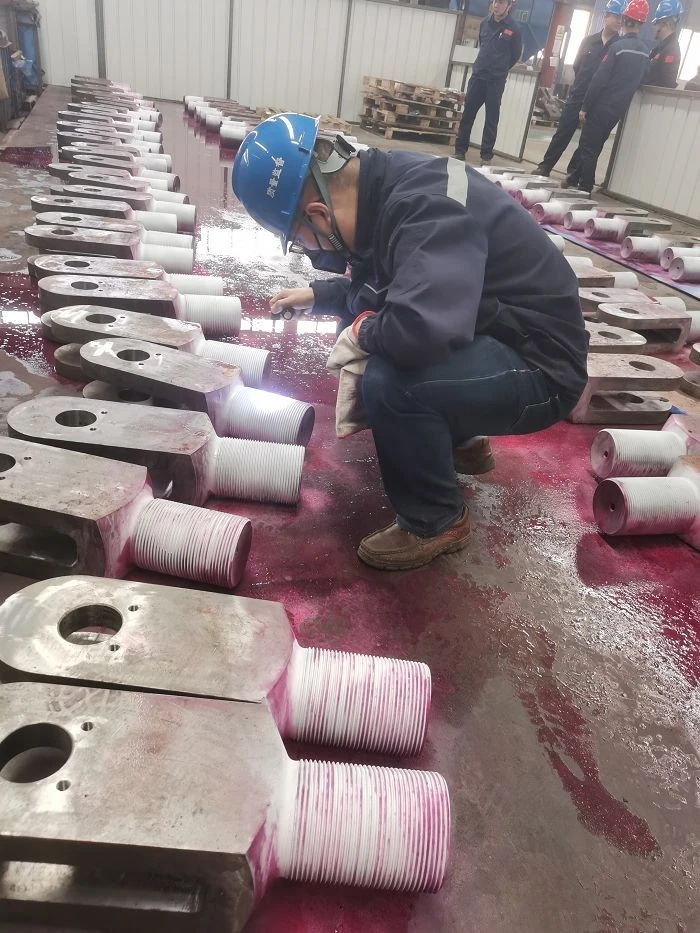

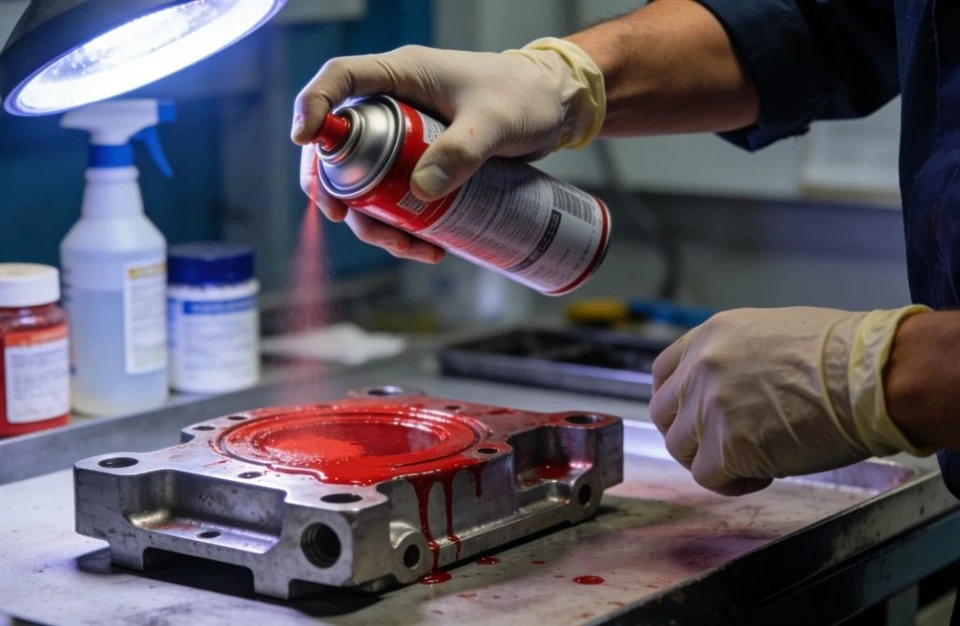
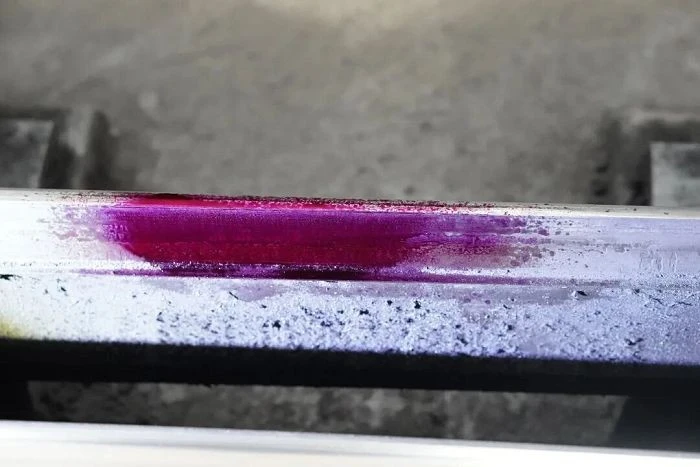
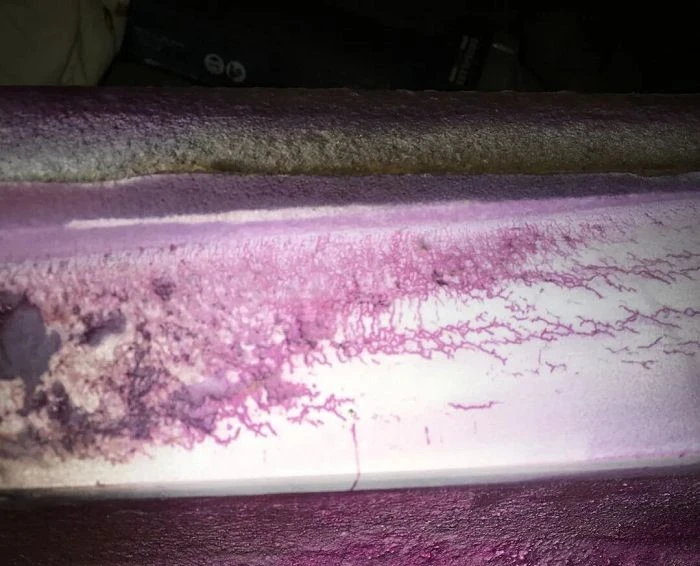
Penetrant Testing
Applicable materials: Suitable for metal materials such as stainless steel, aluminum alloy, copper alloy, titanium alloy, cast iron, carbon steel, as well as non-metallic dense materials such as ceramics, glass, plastics, and composite materials, without being limited by material magnetism or conductivity.
- Fast Delievery
- Quality Assurance
- 24/7 Customer Service
Product Introduction

Detection range
Applicable materials: Suitable for metal materials such as stainless steel, aluminum alloy, copper alloy, titanium alloy, cast iron, carbon steel, as well as non-metallic dense materials such as ceramics, glass, plastics, and composite materials, without being limited by material magnetism or conductivity.
Applicable objects: including forgings, castings, welded parts, profiles, machined parts, precision parts, steel structures, pressure vessels, pipelines, shafts, and various components with surface opening defects.
Applicable scenarios: Used for surface opening defect detection of workpieces, product manufacturing quality acceptance, regular inspection of in-service equipment, non-destructive testing judgment, and defect level assessment.
Testing items
Surface opening defect detection: detection of defects such as cracks, folds, looseness, pinholes, pores, cold shuts, lack of fusion, and microcracks.
Penetration testing process validation: validation of the rationality of process parameters such as penetrant type, penetration time, cleaning method, imaging method, drying time, etc.
Sensitivity verification: Use standard reference blocks for system sensitivity and resolution verification.
Record the location, shape, size of defects, and determine the nature of defects.
Defect acceptance level assessment, testing result recording, and report preparation.

Testing standards
GB/T 18851.1-2023 Non destructive testing - Penetrant testing - Part 1: General principles
GB/T 18851.2-2023 Non destructive testing - Penetrant testing - Part 2: Penetrant agents
GB/T 18851.3-2023 Non destructive testing - Penetrant testing - Part 3: Test methods
NB/T 47013.4-2015 Non destructive testing of pressure equipment Part 4: Penetrant testing
JB/T 6063-2020 General Technical Conditions for Non destructive Testing and Penetrant Testing
JB/T 6064-2020 Non destructive Testing Penetrant Testing Test Blocks
was established in 2011. As a national high-tech enterprise recognized by the Zhejiang Provincial Higher People's Court as a judicial authentication institution for construction engineering quality, we specialize in structural performance testing and safety assessment of construction projects, special equipment, communication towers, electromagnetic environments, large bridges, and building safety appraisal.
The company has more than 100 professional and technical personnel, over 90% of whom hold various medium and senior technical certificates. Equipped with complete testing equipment worth over RMB 10 million, our business scope covers the whole country.