


Degradable Plastic Testing
Applicable materials: fully biodegradable plastics (PLA, PBS, PBAT, PHA, starch based, cellulose based, etc.), photo degradable plastics, thermo oxidative degradable plastics, environmentally degradable plastics, and various modified biodegradable plastic raw materials.
- Fast Delievery
- Quality Assurance
- 24/7 Customer Service
Product Introduction

Detection range
Applicable materials: fully biodegradable plastics (PLA, PBS, PBAT, PHA, starch based, cellulose based, etc.), photo degradable plastics, thermo oxidative degradable plastics, environmentally degradable plastics, and various modified biodegradable plastic raw materials.
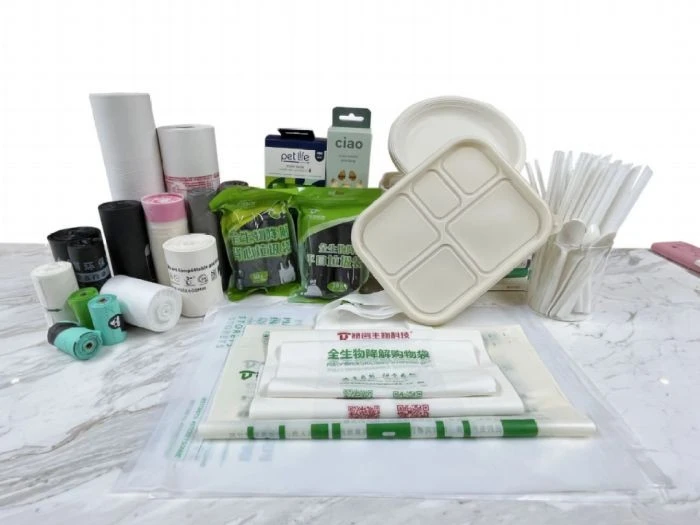
Applicable products: biodegradable shopping bags, disposable tableware, packaging films/bags, agricultural plastic films, express packaging, medical consumables, 3D printing consumables, injection molded/vacuum formed/foamed products, etc.
Applicable scenarios: raw material acceptance, formula development, product certification, factory inspection, type testing, environmental compliance judgment, quality arbitration.
Testing items
(1) Basic physical and chemical properties
Appearance and condition: Particle/product color, uniformity, impurities, crystal dots, black spots, deformation, cracks, odor.
Physical and chemical indicators: melt mass flow rate (MFR), density, ash content, volatile matter, moisture content, moisture content, molecular weight and distribution (GPC).
Component analysis: Principal component identification (FTIR), additive content, residual monomers, and plasticizer (ortho benzene) detection.
(2) Core degradation performance (critical judgment)
Biodegradation rate: Under controlled composting/soil/seawater/freshwater/anaerobic conditions, measure the release of CO ₂, quality loss, biogas production, and determine the degree of degradation.
Disintegration performance: disintegration degree (proportion of fragments ≤ 2mm), compost residue rate, disintegration time.
Degradation kinetics: degradation rate, half-life, molecular weight reduction rate, mechanical property retention rate.
Environmental adaptability: photodegradation (xenon lamp aging), thermal oxidative degradation, hydrolysis stability, soil/seawater/freshwater environmental degradation behavior.
(3) Mechanical properties
Tensile strength, elongation at break, flexural strength, flexural modulus, simply supported beam/cantilever beam impact strength, hardness, tear strength, puncture strength.

(4) Thermal properties
Melting temperature, Vicat softening temperature, hot deformation temperature, glass transition temperature (DSC), thermal stability (TGA), long-term thermal oxidative aging.
(5) Environmental Protection and Safety Performance
Heavy metals: lead, cadmium, mercury, hexavalent chromium, polybrominated biphenyls, polybrominated diphenyl ethers (RoHS), total heavy metal limits.
Food contact: total migration, specific migration (heavy metals, formaldehyde, volatile organic compounds), microbial limits, sensory requirements.
Ecotoxicity: Degradation products have toxic effects on plants/aquatic organisms and soil microbial activity.
Combustion performance: oxygen index, vertical/horizontal combustion, smoke density, toxic gas release.
(6) Processing and application performance
Shrinkage rate during molding, thermal stability during processing, resistance to yellowing, resistance to chemical reagents, weather resistance and aging, light transmittance/haze (film type).
Testing standards
GB/T 20197-2021 Definition, Classification, Marking and Degradation Performance Requirements for Degradable Plastics
GB/T 41010-2021 Biodegradable plastics and products Degradation performance and labeling requirements National Standards Committee
GB/T 32163.2-2015 Ecological Design Product Evaluation Specification Part 2: Degradable Plastics Ministry of Industry and Information Technology
GB 4806.7-2016 Plastic materials and products for food contact
GB/T 19277.1-2021 Determination of final aerobic biodegradability under controlled composting conditions (CO ₂ method)
GB/T 19277.2-2021 Determination of final aerobic biodegradability under controlled composting conditions (gravimetric method)
GB/T 39287-2021 Determination of Aerobic Biodegradability in Soil (Respirometer Method/CO ₂ Method)
GB/T 39285-2021 Determination of aerobic biodegradability of non floating plastics at the interface of seawater sediment
GB/T 39288-2021 Determination of aerobic biodegradability of non floating plastics at freshwater sediment interface
GB/T 39286-2021 Determination of final anaerobic biodegradation and disintegration degree under high solid anaerobic digestion conditions
GB/T 16422.2-2022 Plastic Xenon Lamp Artificial Climate Aging Test (Photodegradation)
GB/T 38082-2019 Biodegradable Plastic Shopping Bags
GB/T 38727-2020 Fully Biodegradable Logistics Express Packaging Plastic Film and Bag
QB/T 5244-2018 Biodegradable Plastic Catering Utensils
QB/T 5245-2018 Biodegradable Plastic Shopping Bags
ISO 14855-1 Determination of biodegradation under controlled composting conditions
EN 13432 Requirements for compostable packaging materials
ASTM D6400 Plastic Composting Degradation Specification
ISO 20200 Determination of plastic disintegration
was established in 2011. As a national high-tech enterprise recognized by the Zhejiang Provincial Higher People's Court as a judicial authentication institution for construction engineering quality, we specialize in structural performance testing and safety assessment of construction projects, special equipment, communication towers, electromagnetic environments, large bridges, and building safety appraisal.
The company has more than 100 professional and technical personnel, over 90% of whom hold various medium and senior technical certificates. Equipped with complete testing equipment worth over RMB 10 million, our business scope covers the whole country.