


Structural Inspection Of Communication Steel Mast Tower
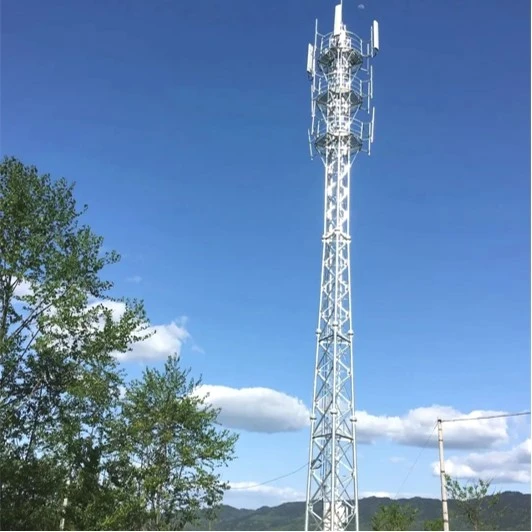
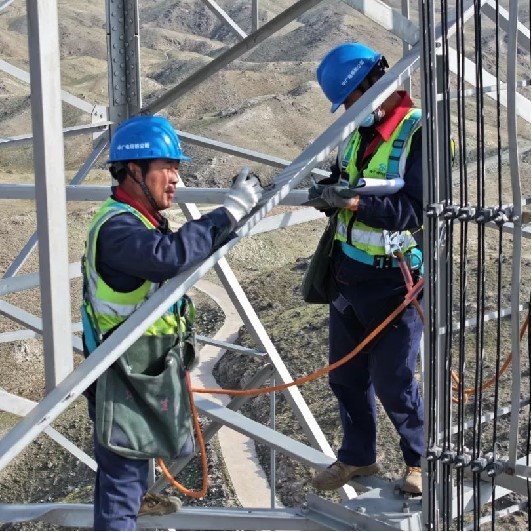
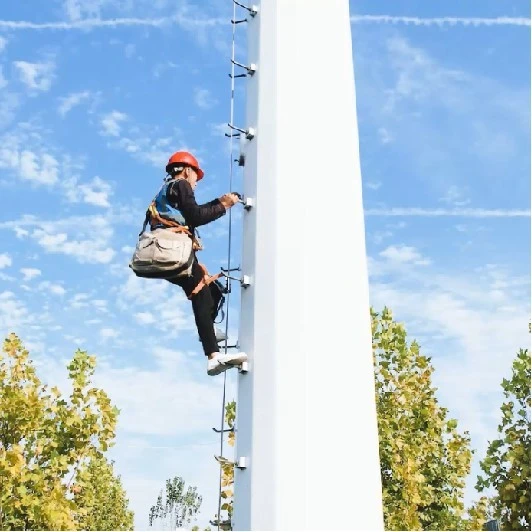
The communication steel mast tower is a high-rise lightweight steel structure, mainly consisting of single tube towers, truss towers, and guy wire mast towers. Its core carries loads such as communication antennas and feeders. The detection focuses on the overall stability of the high-rise structure, the reliability of steel structure connections, component damage and anti-corrosion, and the foundation's resistance to pulling and overturning.
- Fast Delievery
- Quality Assurance
- 24/7 Customer Service
Product Introduction

Structural inspection of communication steel mast tower
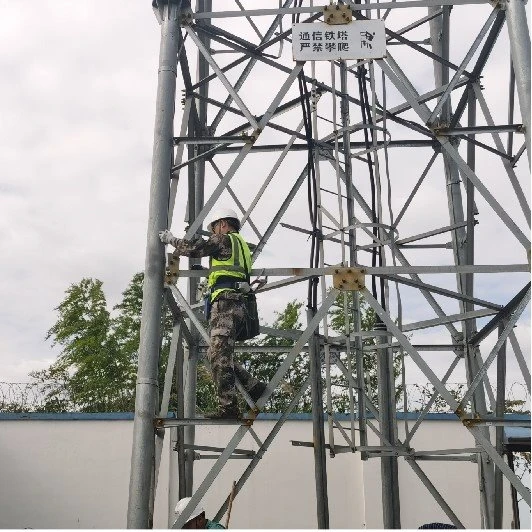
The communication steel mast tower is a high-rise lightweight steel structure, mainly consisting of single tube towers, truss towers, and guy wire mast towers. Its core carries loads such as communication antennas and feeders. The detection focuses on the overall stability of the high-rise structure, the reliability of steel structure connections, component damage and anti-corrosion, and the foundation's resistance to pulling and overturning. It is tested comprehensively according to the foundation tower body node attachment overall performance, and the final structural safety level is determined and suggestions for rectification/maintenance are proposed.
Scope of application and core principles of testing
(1) Applicable testing scenarios
Regular inspection of steel mast towers after use (usually once every 3-5 years, and once every 1-2 years in coastal/corrosive environments);
Installation/replacement of antennas and feeders, review of load-bearing capacity before load increase/layout adjustment;
Structural damage and stability detection after earthquake, typhoon, lightning strike, rainstorm and other disasters;
Construction around the tower base (excavation of foundation pits, road excavation, and loading), and detection of the impact on the foundation and its surroundings;
On site inspection revealed hidden dangers such as deformation of the tower body, loose nodes, peeling of the anti-corrosion layer, and cracking of the foundation;
Safety assessment for the continued use of steel mast towers beyond their designed service life;
The issuance of structural qualification certificates for scenarios such as property rights changes and completion acceptance.
(2) Applicable tower type
Single tube communication steel mast tower, truss type communication steel mast tower, cable type communication mast tower, landscape type communication steel mast tower (steel structure main body), including floor standing and roof mounted (attached) steel mast towers.
(3) Core principles of testing
Non destructive testing is the main approach, with minor damage testing as a supplement, to avoid secondary damage to the tower structure caused by testing;

Core testing content (full dimensional modular)
The inspection of communication steel mast towers is carried out in five modules: tower base and foundation, tower body main structure, connecting nodes, ancillary facilities, overall performance and bearing capacity.
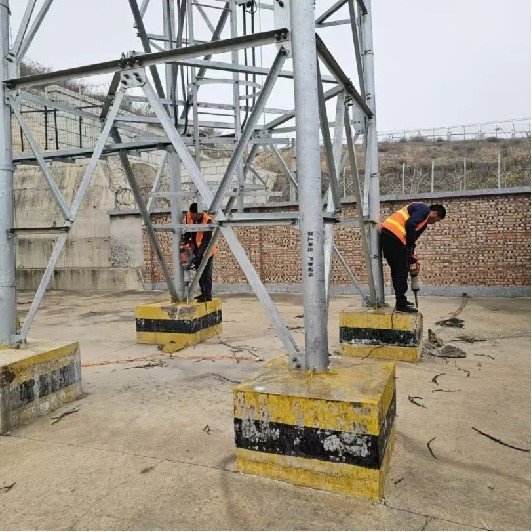
(1) Tower foundation and foundation testing
Basic appearance and defect detection:
Check for cracks, looseness, missing corners, and exposed reinforcement in the concrete foundation, and inspect for cracks, slippage, and settlement in the anchor foundation of the cable tower;
Basic Geometry and Deformation Detection:
Using a level to detect the overall settlement and uneven settlement of the foundation, measuring the top elevation of the foundation, and calculating the settlement difference; Use a total station to detect the horizontal deviation of the foundation top surface and verify the coaxiality between the foundation center and the tower center.
Foundation bolt system inspection:
Check the specifications, quantity, and burial depth of the anchor bolts, verify the consistency with the design values, check the looseness, corrosion, and thread damage of the bolts, test the pull-out/shear performance of the bolts, and investigate the bonding failure and loosening of the bolts with the concrete foundation; Check the integrity of the protective cap and anti-corrosion coating of the anchor bolts.
Basic concrete strength testing
(2) Inspection of the main steel structure of the tower body
Appearance and damage detection of components:
Inspect the surface cracks (circumferential/longitudinal), dents, deformations, and scratches on the steel pipes/sections of the tower body, and use ultrasonic flaw detectors to detect the depth of the cracks;.
Corrosion and section loss detection of steel:
Check the integrity of the anti-corrosion coating: peeling, flaking, powdering, and bubbling range. Use a coating thickness gauge to measure the coating thickness
Use ultrasonic thickness gauge to detect the actual wall thickness/section size of the corroded area of the steel, and calculate the section loss rate;
Geometric dimensions and deformation detection of tower body:
Cable mast tower: detect the bending deformation of the mast and investigate local instability of the mast.
Steel grade review:
Use the Leeb hardness method/spectrometer to verify the steel grade (usually Q235B, Q355B), verify whether it meets the design requirements, and avoid material misuse.
(3) Connection node detection (core: weld quality, bolt torque, node stiffness)
Steel structure nodes are the key to force transmission, and communication steel mast tower nodes are mainly composed of welded nodes and high-strength bolt nodes. Cable tower additional cable connection node detection is added, and node detection is the top priority of steel mast tower detection:
Welding node detection:
Testing locations: tower body segment splicing welds, antenna support and tower body connection welds, truss node welds, ladder and tower body connection welds;
Appearance inspection:% of defects such as weld excess height, undercutting, incomplete welding, porosity, slag inclusion, etc;
Non destructive testing: Ultrasonic testing (UT) is used to detect internal defects in key welds under stress.
High strength bolt node detection:
Testing parts: truss node bolts, antenna bracket fixing bolts, tower body splicing flange bolts;
Torque detection: Use a fixed torque wrench to detect the tightening torque of bolts, and review whether it meets the design/specification requirements (Q355 steel connection torque is generally ≥ 300N · m, Q235 steel ≥ 200N · m). The proportion of loose bolts is ≤ 5%;
(4) Auxiliary facility testing
Antenna and feeder bracket inspection:
Check the specifications and layout of the bracket, and verify its compatibility with the design load;
Inspect the connection welds/bolts between the bracket and the tower body, check for looseness, deformation, rust, as well as bending and instability of the bracket itself;
Check the fixed state of the feeder card and investigate the excessive additional load on the bracket caused by the sagging of the feeder.
Lightning protection and grounding system testing:
Check the connection reliability of the lightning arrester (top cap, lightning rod) on the tower body, without looseness or corrosion;
Check the connection between the grounding down conductor and the tower body, and measure the grounding resistance value;
Check the equipotential connection between the lightning protection system and communication equipment, and ensure no poor contact.
Other attachments: Check the fixed status of tower identification and aviation obstruction lights, and investigate local tower vibrations caused by loose equipment.
(5) Overall performance and bearing capacity verification
Based on the actual component parameters, connection status, and material properties detected on site, combined with the current load, professional software (PKPM, MIDAS/GEN) is used for modeling and verification, which is the core of the overall safety assessment:
Load calculation:
Dead load: tower weight, antenna/feeder/support weight, ladder/platform weight;
Live load: wind load, snow load, maintenance live load;
Special loads: lightning strikes, earthquake loads, typhoon loads.
Core verification items:
The overall compressive and bending bearing capacity of the tower body shall be reviewed, and the stress ratio, foundation pull-out resistance, overturning resistance, and anti slip bearing capacity of each segment of the components shall be checked. The overall stability of the tower body shall be verified, and the risk of overall collapse caused by local component instability shall be investigated. The overall stability of the cable system shall be verified for the guyed mast tower, and the coordinated force between the cable tension and the mast shall be reviewed.
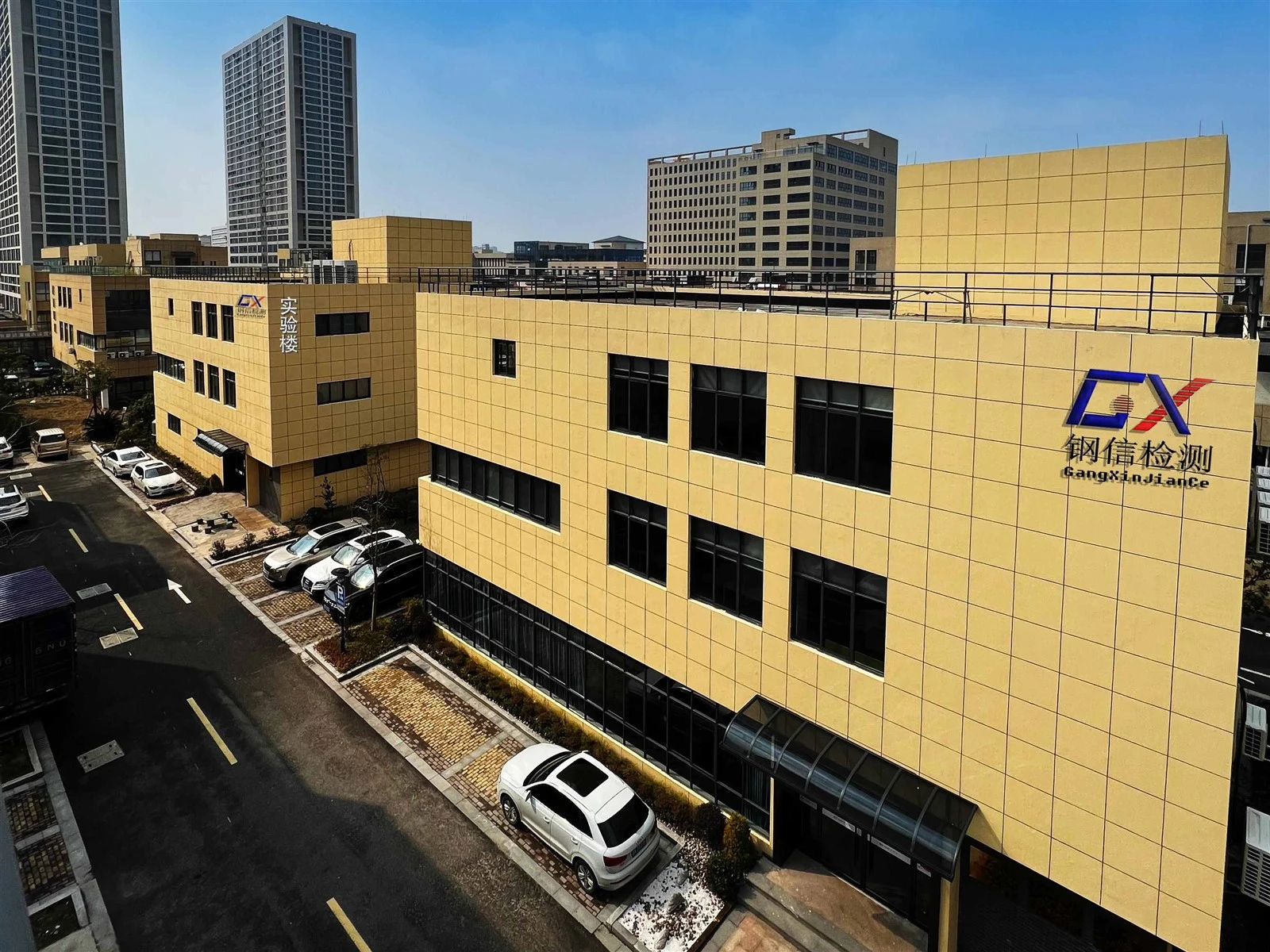
was established in 2011. As a national high-tech enterprise recognized by the Zhejiang Provincial Higher People's Court as a judicial authentication institution for construction engineering quality, we specialize in structural performance testing and safety assessment of construction projects, special equipment, communication towers, electromagnetic environments, large bridges, and building safety appraisal.
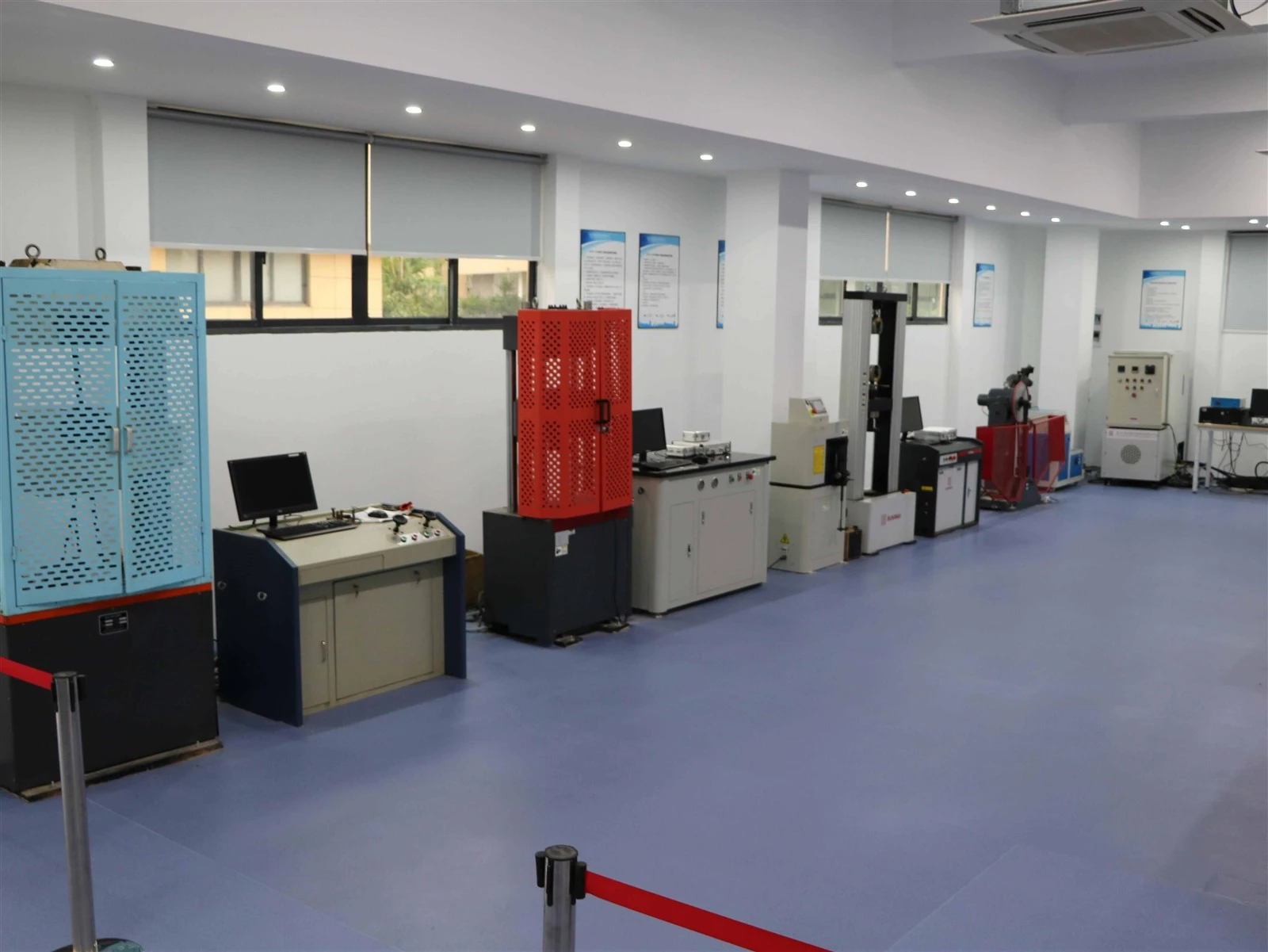
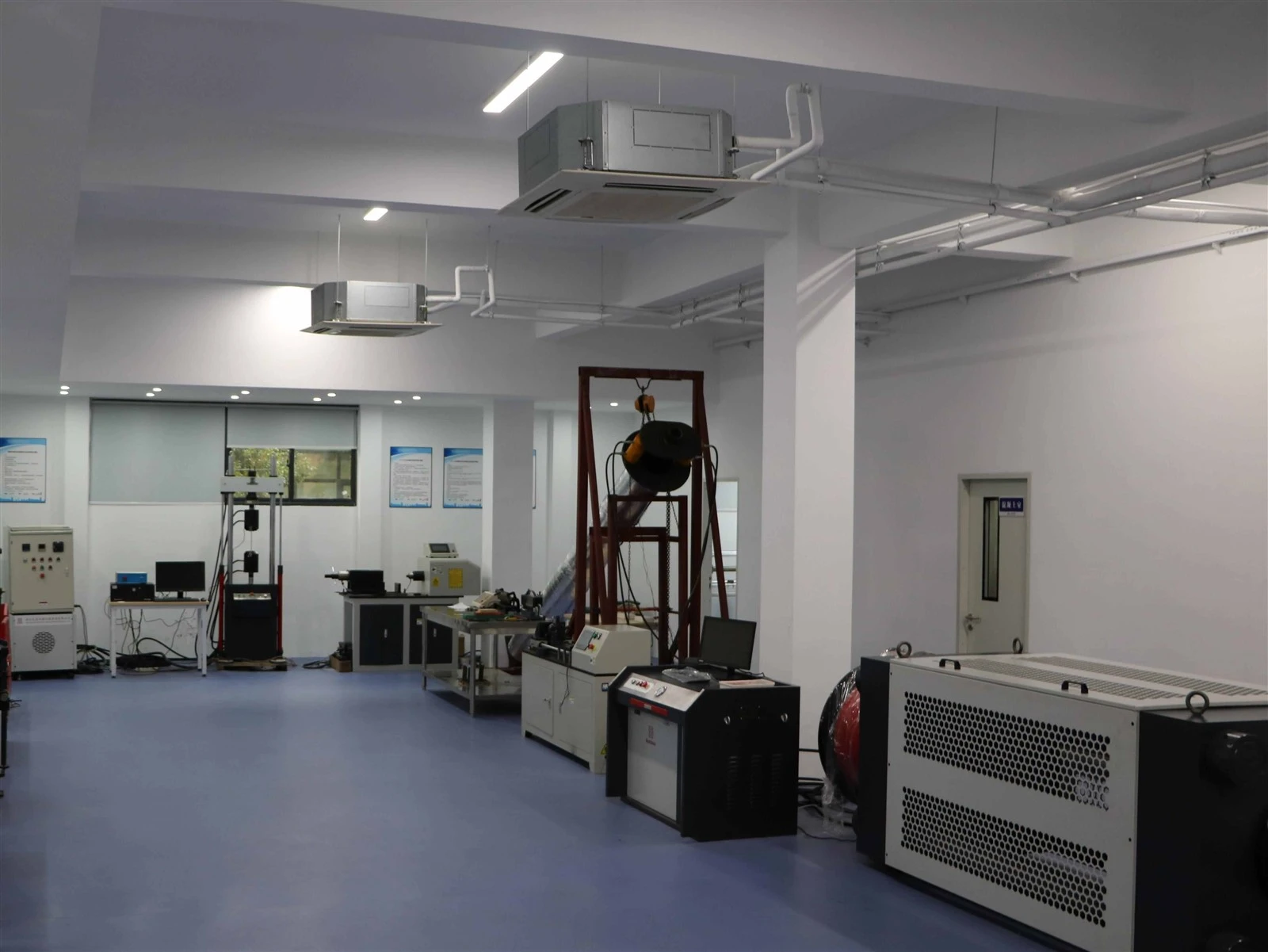
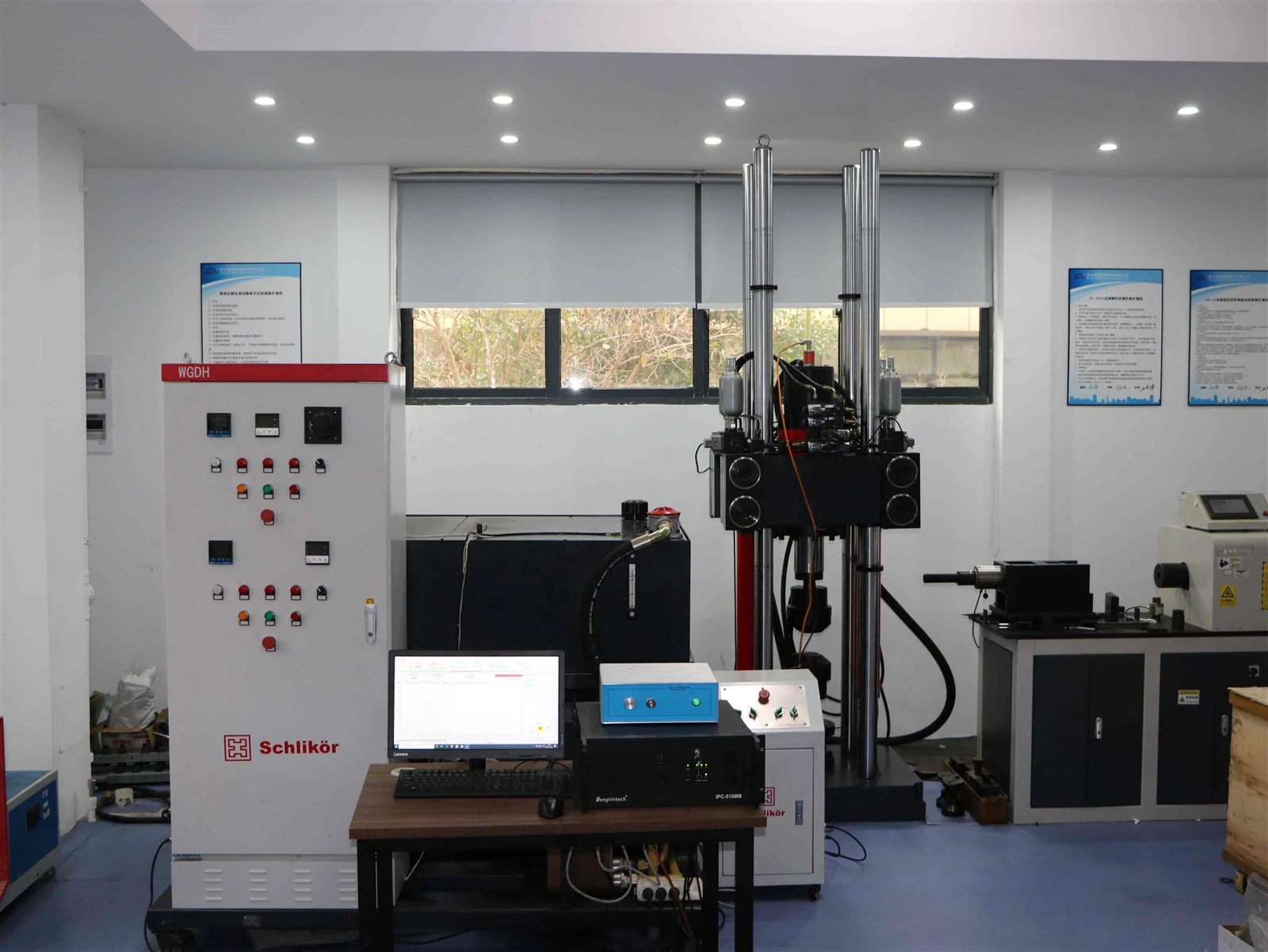
The company has more than 100 professional and technical personnel, over 90% of whom hold various medium and senior technical certificates. Equipped with complete testing equipment worth over RMB 10 million, our business scope covers the whole country.