


Lamp Inspection
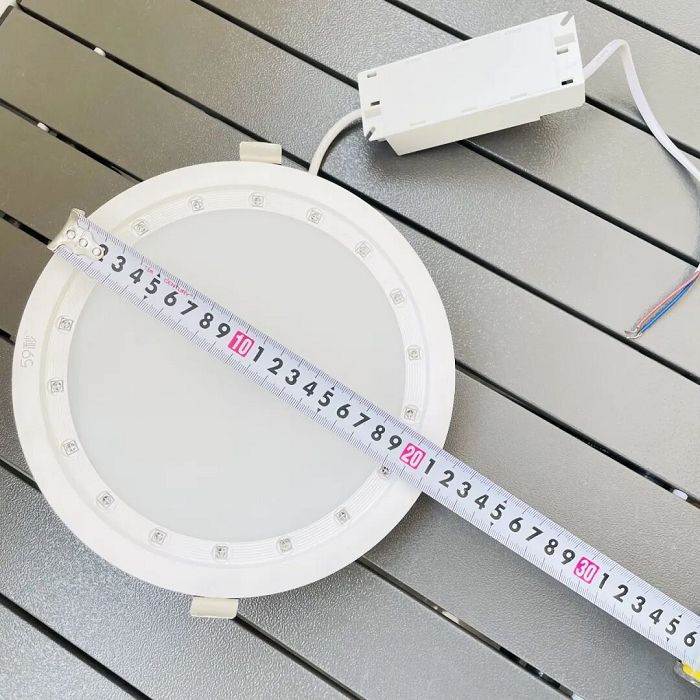
AC lighting fixtures with built-in power control: Use a digital power meter to measure parameters such as voltage, current, power, and power factor of the lighting fixtures.
- Fast Delievery
- Quality Assurance
- 24/7 Customer Service
Product Introduction
Inspection items
1. Electrical performance parameters:
⑴ Working voltage ⑵ Working current ⑶ Power ⑶ Power factor ⑶ Lamp safety level
2. Optical parameters:
⑴ Light intensity: Light intensity distribution curve, equal light intensity curve.
⑵ Luminous flux: total luminous flux, effective luminous flux, regional luminous flux table, ring luminous flux table.
⑶ Illuminance: Illuminance distribution, isoilluminance curve.
⑷ Light source: number of light sources, light source model, light source composition, light source packaging.
⑸Color temperature.
⑹Lighting angle of the lamp.
3. Structure and appearance:
⑴ Shell structure material ⑵ Type of lamp ⑶ Weight of lamp ⑶ Label of lamp ⑶ Protection level of lamp.
4. Reliability experiment:
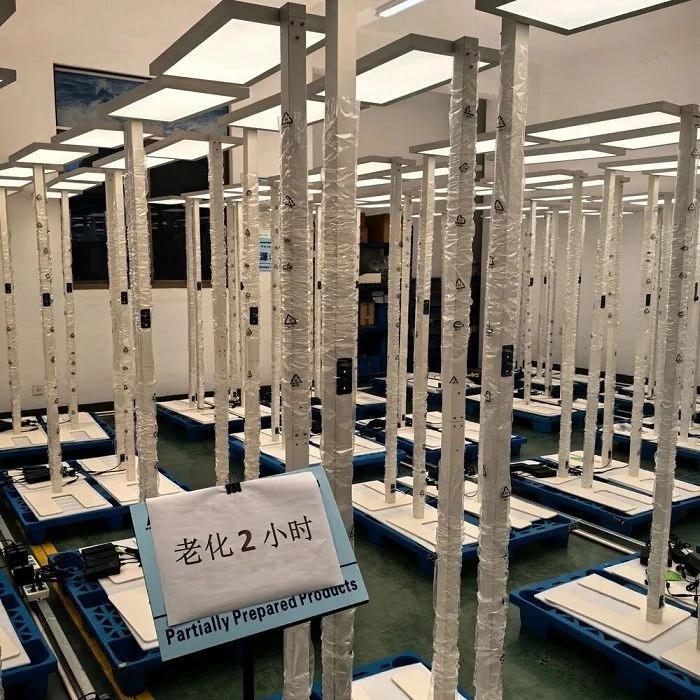
⑴ Temperature rise experiment ⑵ Switching electrical experiment ⑶ Vibration experiment ⑶ Luminescence maintenance characteristics and aging experiment. ⑸ Lamp function inspection.

Inspection instructions:
1. Electrical parameters:
⑴ DC powered lamps controlled by external power supply: voltage and current measured by voltage and current meters.
⑵ AC lighting fixtures with built-in power control: Use a digital power meter to measure parameters such as voltage, current, power, and power factor of the lighting fixtures.
Class I lighting fixtures must undergo tests for electrical strength, leakage current, and insulation resistance. The electrical strength is the breakdown phenomenon of 220V terminal and shell 1500V, 1MIN. Leakage current ≤ 1.0MA. Insulation resistance ≥ 2M Ω.
2. Optical performance parameters:
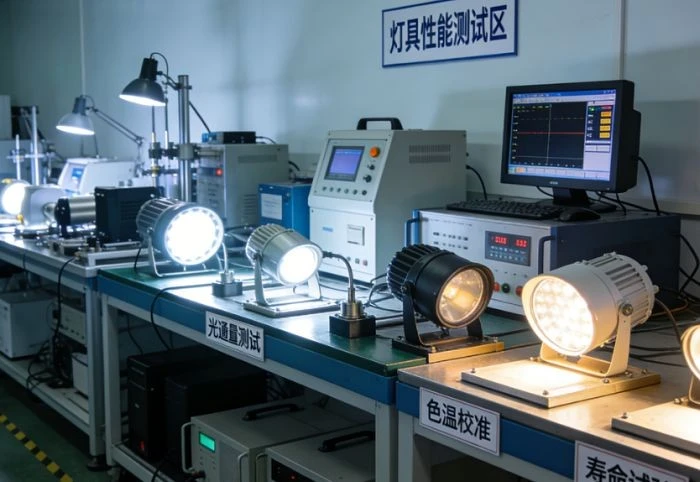
⑴ Intensity (CD): The intensity distribution curve, equal intensity curve, and intensity distribution data table can all be measured using a distribution photometer.
⑵ Luminous flux (LM): The total luminous flux and effective luminous flux are based on the test data of the spectral analysis system. The regional luminous flux table and the ring luminous flux table can be measured using a distributed photometer.
⑶ Illuminance (LUX): The illuminance distribution and isoilluminance curve can be measured using a distributed photometer.
Color temperature<K>: can be measured using a spectral analysis system.
3. Reliability experiment:
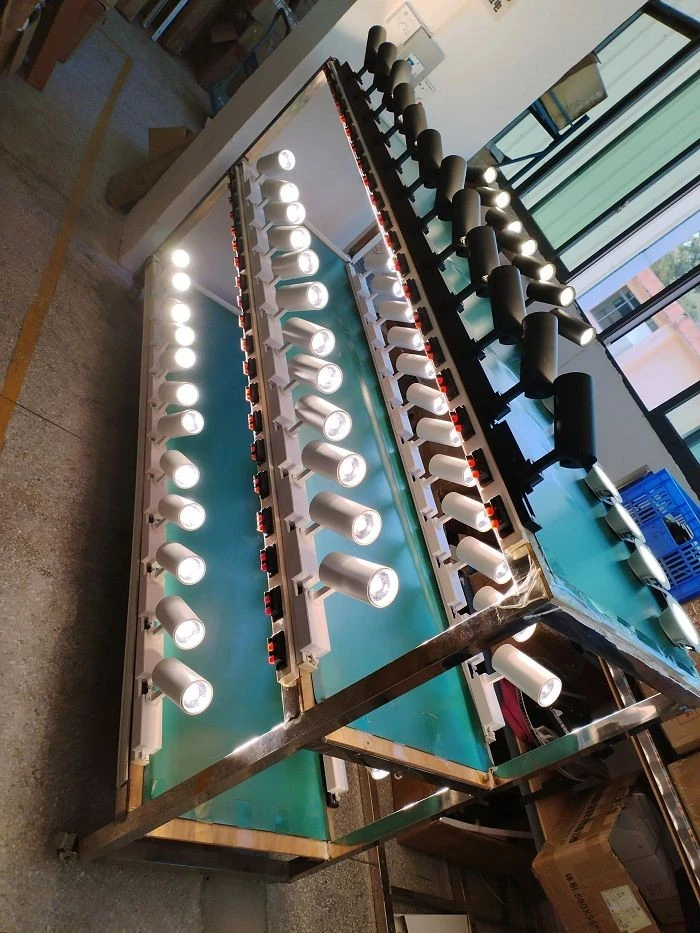
⑴ Temperature rise experiment, measuring the temperature of specific components when the lamp is working at high power under a specific temperature environment. In addition to testing the components according to the detection requirements, the driving IC, lamp housing, LED [lamp legs or LED heat sink] and other components are fixed measurement points. Record every 30 minutes until each measuring component is at a constant temperature, including the duration of power on, the temperature of the measuring component, and the ambient temperature at that time.
⑵ The switch on/off experiment is conducted under normal working conditions of the lamp, with 1 minute on and 30 seconds off as one switch cycle. The switch on/off experiment is carried out continuously for 100 times, and the working condition of the lamp is recorded.
⑶The vibration test is to place the lamp on a vibration table and vibrate it for 30 minutes to check whether the various components of the lamp are loose or detached, and whether the lamp can work normally.
⑷ During reliability testing, check the functional items of the lighting fixture according to the instructions provided.
Testing standards
GB 7000.1-2015 Luminaires Part 1: General Requirements and Tests
GB 7000.21-2008 Luminaires - Part 2-1: Special Requirements - Fixed Universal Luminaires
GB 7000.202-2008 Luminaires - Part 2-2: Special Requirements - Embedded Luminaires
GB 7000.203-2013 Luminaires Part 2-3: Special Requirements for Road and Street Lighting Fixtures
GB 7000.204-2008 Luminaires - Part 2-4: Special Requirements - Removable Universal Luminaires
GB/T 7000.204-2023 Luminaires - Part 2-4: Special Requirements - Removable Universal Luminaires
GB 7000.7-2005 Safety Requirements for Projection Luminaires
GB 7000.3-2012 Safety Requirements for Fixed Luminaires
GB 7000.10-2008 Safety Requirements for Road and Street Lighting Fixtures
JIS C 8107-1-2015 Luminaires Part 1: General Requirements
JIS C 8151-2015 Performance Standard for LED Lighting Products
JIS C 0950-2016 Determination Method for Specific Chemical Substances in Electronic and Electrical Products
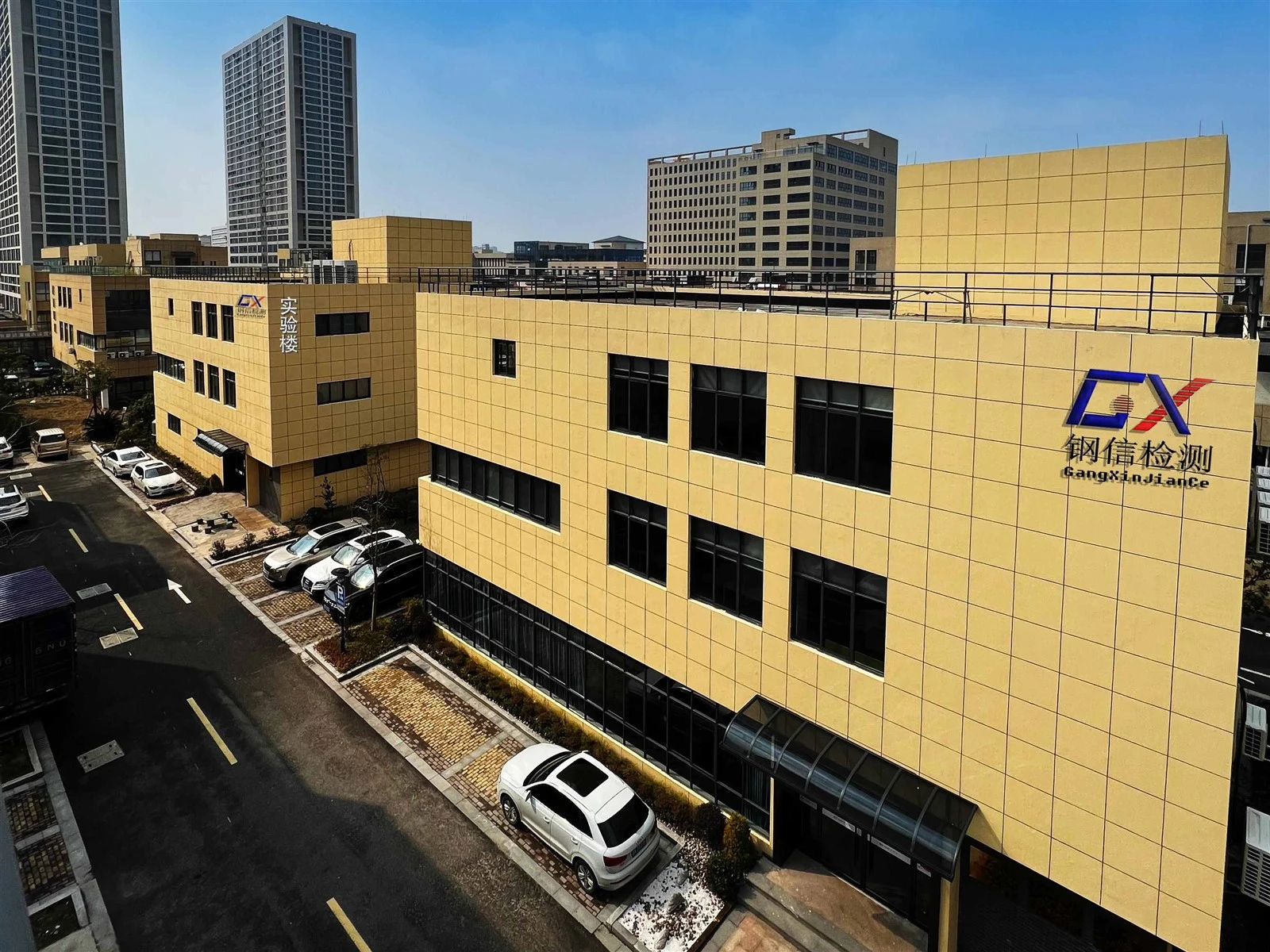
was established in 2011. As a national high-tech enterprise recognized by the Zhejiang Provincial Higher People's Court as a judicial authentication institution for construction engineering quality, we specialize in structural performance testing and safety assessment of construction projects, special equipment, communication towers, electromagnetic environments, large bridges, and building safety appraisal.
The company has more than 100 professional and technical personnel, over 90% of whom hold various medium and senior technical certificates. Equipped with complete testing equipment worth over RMB 10 million, our business scope covers the whole country.