



Kitchenware Inspection
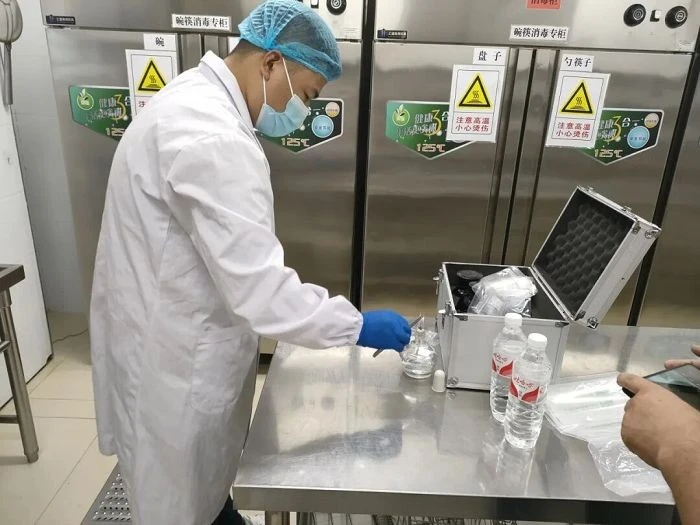
Kitchenware testing focuses on four core dimensions: food contact safety, mechanical durability, functional adaptability, and environmental compliance. It covers all categories of kitchenware, including cooking, dining, storage, and cleaning. According to national/international standards, testing requirements are clearly defined to ensure that products meet the bottom line of food contact safety and daily durability requirements.
- Fast Delievery
- Quality Assurance
- 24/7 Customer Service
Product Introduction

Kitchenware inspection
Kitchenware testing focuses on four core dimensions: food contact safety, mechanical durability, functional adaptability, and environmental compliance. It covers all categories of kitchenware, including cooking, dining, storage, and cleaning. According to national/international standards, testing requirements are clearly defined to ensure that products meet the bottom line of food contact safety and daily durability requirements. The specific details are as follows:
Testing Scope
(1) Classified by product function
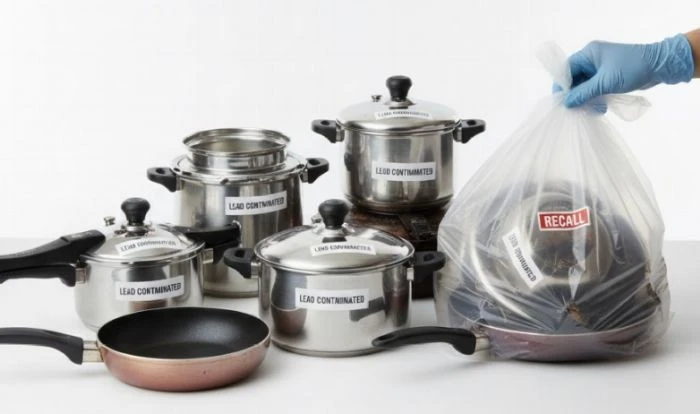
1. Cooking utensils: wok, frying pan, soup pot, steamer, pressure cooker, stew pot, non stick pot, cast iron pot, aluminum alloy pot, stainless steel pot, etc;
2. Baking utensils: baking pans, baking molds, piping bags, baking gloves, cake molds, etc;
3. Tableware: bowls, plates, dishes, spoons, chopsticks, forks, knives, meal boxes, straws, freshness boxes, etc;
4. Storage kitchenware: food storage cans, sealed cans, fresh-keeping bags, vacuum storage boxes, etc;
5. Specialized kitchen utensils: pressure cookers, electric cookers, cooking pots (including food contact parts), knives (kitchen knives, scissors), etc.
(2) Classified by Material
Metal materials (stainless steel 304/316, aluminum alloy, cast iron, copper alloy), ceramic materials, glass materials, plastic materials (PP, PE, PPSU, silicone), wooden materials (wooden chopsticks, wooden shovels), coating materials (PTFE coating, ceramic coating, vermiculite coating).

Testing Content
(1) Food contact safety testing (mandatory core item)
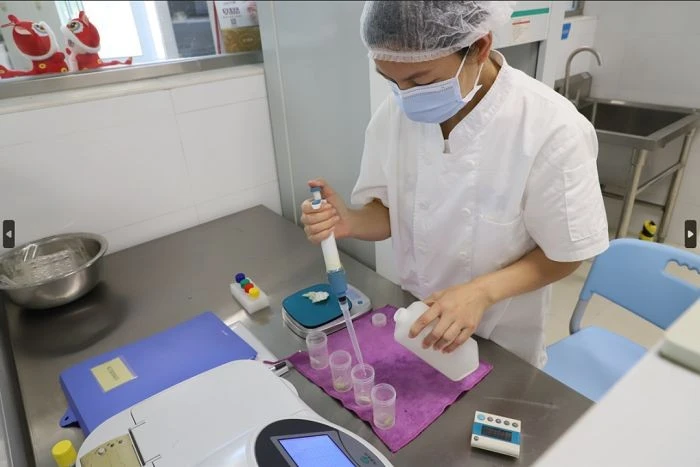
1. Heavy metal migration amount: lead (≤ 0.5mg/L), cadmium (≤ 0.05mg/L), chromium (≤ 0.4mg/L), nickel (≤ 0.1mg/L), arsenic (≤ 0.08mg/L), tested by soaking in food simulation solution (4% acetic acid, 10% ethanol, etc.);
2. Material compliance: Stainless steel grade verification (304/316 element content meets the standard), plastic material has no odor, wood has no mold/insect damage, and there is no risk of coating peeling off;
3. Limit of harmful substances: formaldehyde emission (wooden kitchen utensils ≤ 0.124mg/m ³), plasticizer (DEHP ≤ 0.3mg/kg), bisphenol A (BPA ≤ 0.05mg/kg), heavy metal leaching (in compliance with GB 4806 series limits);
4. Coating safety: non stick coating adhesion (no detachment in the hundred grid test), coating wear resistance (no exposed substrate after ≥ 5000 frictions), and no toxic gas release during high temperature use.
(2) Mechanical performance and durability testing
1. Structural strength: The firmness of the pot handle (hanging without looseness at 1.5 times the rated load), the hardness of the cutting tool (HRC ≥ 52, stainless steel knife), and the impact resistance of the pot body (no deformation/cracking at a height of 1m with a 1kg heavy hammer);
2. Durability: repeated heating and cooling cycles of cookware (≥ 500 times without deformation/coating detachment), drop resistance of tableware (ceramic/glass dropped from a height of 1.2m without damage), and lifespan of sealed storage box opening and closing (≥ 1000 times without seal failure);
3. Pressure resistance performance: pressure cooker rated pressure 1.2 times test (no leakage/explosion), vacuum storage box negative pressure holding time (≥ 24 hours without leakage).
(3) Functional performance testing
1. Cooking function: Uniform thermal conductivity of cookware (temperature difference ≤ 10 ℃), non stick cookware (no sticking of fried eggs), sealing of steamer (steam leakage after boiling water ≤ 5%);
2. Storage function: Sealing performance of the fresh-keeping box (no leakage after 30 minutes of inversion), moisture resistance of the storage tank (no moisture in the storage environment under relative humidity of 80%);
3. Tool function: sharpness (no jamming when cutting pork skin), corrosion resistance (no red rust after neutral salt spray test ≥ 48h);
4. Special functions: Heating efficiency of electric boiling pot (boiling 1L of water in ≤ 15 minutes), pressure stability of pressure cooker (pressure fluctuation ≤ 0.02MPa).
(4) Appearance and process inspection
1. Appearance quality: No burrs, sharp edges (rounded edge radius of tableware ≥ 0.5mm), no scratches/dents/bubbles, uniform color;
2. Process accuracy: Dimensional deviation (pot diameter deviation ≤± 2mm), coating uniformity (thickness deviation ≤ 10%), no virtual welding/cracking at welding/splicing points.
(5) Environmental and health performance testing
1. Odor: The new kitchen utensils have no irritating odor (passed the olfactory test);
2. Volatile Organic Compounds (VOCs): The VOC emissions from plastic/coated kitchen utensils are ≤ 0.5mg/m ³;
3. Antibacterial performance (special requirement): Antibacterial rate (≥ 99% for Escherichia coli and Staphylococcus aureus), in compliance with the requirements of the GB/T 21551 series.
Testing standards
GB 4806.1-2016 National Food Safety Standard General Safety Requirements for Food Contact Materials and Products
GB 4806.2-2015 National Food Safety Standard for Pacifiers
GB/T 3534-2002 Determination of Lead and Cadmium Release from Household Ceramics
GB/T 28010-2011 General Technical Conditions for Door Locks
GB 4806.9-2016 National Food Safety Standard Metal Materials and Articles for Food Contact
GB 4806.4-2016 National Food Safety Standard Ceramic Products
GB 4806.5-2016 National Food Safety Standard Glass Products
GB 4806.7-2016 National Food Safety Standard - Plastic Materials and Articles for Food Contact
GB 4806.11-2016 National Food Safety Standard Rubber Materials and Products for Food Contact
GB/T 32095.1-2015 Household Non stick Cookware Part 1: Performance Requirements and Test Methods
GB/T 15067.1-2019 Stainless Steel Tableware
QB/T 2174-2014 Aluminum Kitchenware
GB/T 29601-2013 Stainless Steel Vessels
GB/T 30768-2014 Food contact paper and paperboard materials and products
QB/T 4035-2010 Pressure Cooker
GB/T 21551.2-2010 Household and Similar Electrical Appliances - Special Requirements for Antibacterial Materials with Antibacterial, Sterilization, and Purification Functions
QB/T 1999-2015 Enamel Tableware
GB/T 38723-2020 Determination of volatile organic compound emissions from food contact materials and products
EN 16523-2015 General safety requirements for food contact materials and products
FDA 21 CFR Part 175 Plastic Additives for Food Contact
ASTM F1331-20 Stainless Steel Tableware Standard
JIS S 2044-2015 Stainless Steel Tableware
JIS S 1025-2016 Ceramic Tableware
PSE certification related standards (electrical kitchenware)
was established in 2011. As a national high-tech enterprise recognized by the Zhejiang Provincial Higher People's Court as a judicial authentication institution for construction engineering quality, we specialize in structural performance testing and safety assessment of construction projects, special equipment, communication towers, electromagnetic environments, large bridges, and building safety appraisal.
The company has more than 100 professional and technical personnel, over 90% of whom hold various medium and senior technical certificates. Equipped with complete testing equipment worth over RMB 10 million, our business scope covers the whole country.